
In job interviews, my answers are far too short
"They ask me a question, and I answer it in one or two sentences. Then it is quiet, and I wonder what else I should have said."
The interviewer asks a question. You answer it clearly and correctly, in one or two sentences. Then there is a pause, and you can feel that something is missing. The interviewer waits, asks a follow-up, and you answer briefly again. After a while, the interview starts to feel like a series of questions and short replies, not like a conversation.
Many international profesionals, being interview for a job in Germany, Austria or Switzerland, experience this behaviour. Short answers can have many reasons. You may want to avoid mistakes, you may not want to talk too much about yourself, or you may simply not know how much is expected. Brevity itself is not a problem, and in German-speaking countries, clear and concise answers are often appreciated. The problem starts when the interviewer does not get enough to understand who you are and what you can do.
The reasons are different for everyone: Sometimes it is about not knowing the expectations, sometimes about the foreign language with words and grammar, sometimes about how you see yourself.
Giving short answers in a job interview does not necessarily mean that you lack experience or ideas. Sometimes, you answer exactly what was asked, because you think that more would be too much. Sometimes, you keep your sentences simple, because you want to avoid mistakes in German. And in many cases, if you changed your cultural job environment, you feel that talking about yourself, your own work and success is not appropriate.
These different situations can produce a similar result: your answer is correct, but the interviewer does not learn enough about you. On top, it might be, that even don't seem motivated enough.
This has a real cost. An interviewer can only judge what they hear, and a strong profile that is communicated briefly can look thinner than it is.
Start with a simple structure that you can fill: a direct answer first, then one example, then the result or what you learned. This way, you give more without wandering. For example, instead of answering 'Yes, I have led teams', you could add how big the team was, one situation that was challenging and what came out of it.
You can also use short questions to yourself while you speak: What is the context? What did I do? What happened because of it? Why does it matter for the new role? Often, one of these questions gives you the next sentence.
If you are not sure whether you said enough, you can ask at the end: 'Soll ich dazu noch mehr ins Detail gehen?' This shows interest and gives the interviewer the choice.
Not necessarily. In German-speaking countries, clear and focused answers are often valued, and long, unfocused answers can be a problem as well. It depends on the question, the role and the interviewer. A simple factual question may need a short answer, while a question about your experience, your motivation or a difficult situation usually calls for more.
As a rough orientation, many interviewers expect an answer to such open questions to last around one to two minutes. This is a guide, not a rule, and it varies by industry and company. If you notice that your answers regularly last only a few sentences, and the interviewer keeps asking for more, it is a sign that you could give more context.
A good test is: after your answer, does the interviewer know what you did, how you did it and what it led to? If yes, your answer is long enough, however short it is.
For international professionals interviewing in Germany, Austria or Switzerland, it is useful to separate three questions:
- Do I know how much is expected, and do I have a structure for fuller answers?
- Do I have the German words and phrases to say more with ease?
- Can I trust that saying more about myself is appropriate and welcome?
Each question points to a different kind of help. Interview training offers a structure and practice for answers that give the interviewer enough. Language training builds the vocabulary and phrases you need to expand your answers naturally. Coaching looks at what makes you stop early, such as fear of mistakes, ideas about modesty or the feeling of taking too much space, and helps you to build more trust in yourself.
Often several of these play a role. The six questions on this page help you see which one to start with.
The following six questions show you where to look.
Let's find out what could help you in this situation
How would your problem change if you knew that a fuller answer is welcome and does not take too much of the interviewer's time?
How would your problem change if you regularly checked at the end of an answer whether the interviewer wanted to hear more?
How would your problem change if you could express longer, connected thoughts in German as easily as short, simple sentences?
How would your problem change if you believed that interviewers expect you to go beyond the question and tell them more?
How would your problem change if you did not have to stay in the background to be seen as polite?
How would your problem change if you were not afraid of coming across as pushy or arrogant when you say more?
What your responses tell you
Take a moment to look at what came up. Which of these ideas feels most familiar? Do you already see a first step you could try, perhaps something small, in your next preparation or conversation?
For some people, one or two of these ideas are enough to change how they prepare. For others, the same patterns return, especially when the pressure is high. If that sounds like you, it may help to look at the situation with someone alongside you. This is what the next section is about.
Finding a Solution That Holds Up Even Under Pressure
You may already have tried the usual remedies: learning what is expected, practising longer answers, building your German vocabulary. They help, and they are worth doing. Language training gives you the words to say more. Interview training gives you a structure to fill, such as point, example and result. But neither changes what happens inside you when you reach the end of your first sentence and decide to stop, and that is often the moment the answer ends too early.
Systemic coaching starts one step earlier. We look at what makes you stop: what you expect of yourself, what you fear could go wrong if you say more, and how you imagine the interviewer sees you. We also look at the situations in which you already speak with ease and in detail, with which people, about which topics, and what is different there. From there we work towards a way of answering that fits you and your professional reality, not a technique you have to remember in the moment.
Signs that it is working:
- You sense when an answer is complete for the interviewer, not only for you.
- You add an example or a reason without feeling that you are talking too much.
- A short pause after your answer feels calm, not like a gap you caused.
- You can ask 'Would you like me to go into more detail?' and mean it.
- All of this still holds when a question surprises you or the atmosphere is cool.
About me
I am a solution-oriented, certified management coach, a business transformation consultant and manager, and a native German speaker. My background is in international management, leadership and organisational transformation.
Over many years, I have worked with professionals and leaders in complex international environments. There, expertise alone is rarely enough: people also need to communicate their experience, position themselves clearly and navigate different expectations and ways of working. My own international experience spans Europe, Africa, North and South America, and today I combine coaching with training in Business German.
If your answers stay short, I will not simply work with you on longer answers. Short answers often have good reasons: care with a foreign language, respect for the interviewer's time, modesty or the wish to avoid mistakes. As a native German speaker and Business German trainer, I know how answers are heard in German-speaking interviews, and where international professionals tend to say less than they could. I help you to say what matters, in the amount that fits the situation, and to feel at ease while you do. Together we look at what makes you stop after a sentence or two, at the situations in which you already speak with ease and in detail, and at what would help you do the same in the interview.
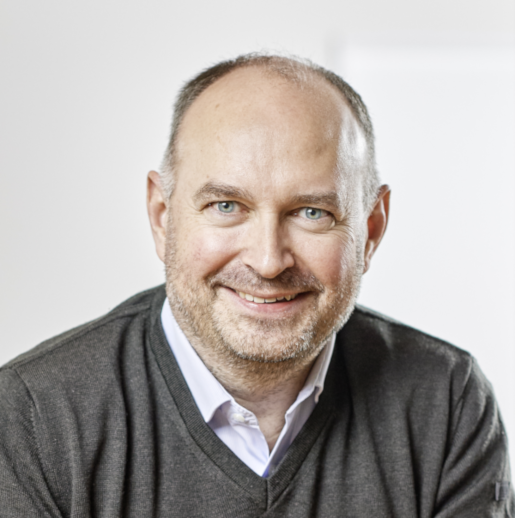 I offer a free chemistry call to personally connect, share how I work with clients, and see if my coaching approach aligns with your goals.
It's the perfect opportunity to decide if we're a good match for your interview preparation.