
German Job Interviews for Ukrainian Middle Managers: 5 Cultural Differences and How to Adapt
Written by Gernot Sauerborn, Systemic Management Coach for International Experts in German Speaking Countries
Last Update: November 7, 2026
Many Ukrainian middle managers have led teams through constant change and learned to solve problems quickly. German-speaking employers ask a second question: Can you also build structures that keep the team performing without your constant involvement?
Strong candidates show both: hands-on resourcefulness and reliable delegation.
Most Important Cultural Differences
| Ukraine | German Speaking Countries | |
|---|---|---|
| Leadership Focus | Directive control and personal oversight | Coordinated empowerment and process enablement |
| Authority | Position-based and relationship-dependent | Competence-based and process-anchored |
| Decision-Making | Centralized with limited delegation | Delegated with clear accountability frameworks |
| Team Development | Task-focused with informal loyalty building | Structured development through feedback and qualification |
| Positioning | The controlling hub who ensures execution | The enabling link who strengthens organizational capability |
How to Adapt to Cultural Differences For German Job Interviews
Your hands-on competence earns respect. Add how you design the conditions under which your team delivers without you checking every step.
- Ukraine: Leadership focuses on direct oversight and personal involvement in execution. Managers maintain control by staying closely involved in details, checking work personally, and being the central coordination point. Trust is built through demonstrated personal competence.
- Germany, Austria, and Switzerland: When a candidate describes checking every result personally, interviewers hear a manager who does not scale. They want to know what you set up so that quality is secured by roles, routines, and clear agreements, with you stepping in only where needed.
Your mandate from above matters. Show in addition what your team gains from your competence and consistency.
- Ukraine: Authority stems primarily from hierarchical position and personal relationships with senior leadership. A manager's mandate comes from above, and team acceptance is often based on loyalty and personal connection rather than purely professional criteria.
- Germany, Austria, and Switzerland: Interviewers ask what makes colleagues follow you when your title is not mentioned. Examples of fair processes, reliable follow-through, and visible expertise answer that better than a reference to your position or to senior sponsors.
Decisive leadership is valued. Show where you also hand decisions down while staying accountable for the outcome.
- Ukraine: Decision-making tends to be centralized. Managers make key decisions themselves, delegating only routine implementation. This approach minimizes perceived risk but can create bottlenecks and limit team development. Accountability is often hierarchical and upward-focused.
- Germany, Austria, and Switzerland: A manager who decides everything personally can look like a bottleneck. Hiring managers listen for the boundaries you set for your team, which decisions you hand over, and how you stay informed without deciding every detail.
Your personal care for the team is a strength. Show how you also build skills in a planned way.
- Ukraine: Team development often occurs informally through personal relationships and on-the-job guidance. Managers build loyalty by being personally available and protective of their team. Formal development structures may be secondary to day-to-day problem-solving together.
- Germany, Austria, and Switzerland: Loyalty is welcome, but interviewers expect development to be a visible management task: regular feedback, agreed goals, training plans. 'How did you develop your people?' is a standard question, so prepare one example with a before and after.
Being the reliable hub is a real achievement. Present yourself as someone who also makes the hub less necessary.
- Ukraine: Middle managers position themselves as the reliable hub that ensures execution. Their value proposition is: 'I make sure things get done correctly and on time.' Success means being indispensable to both their team and their superiors.
- Germany, Austria, and Switzerland: 'Without me it would not work' can sound like a risk to an employer, because it implies dependence on one person. Stronger is a sentence such as 'The team keeps delivering when I am away, because we defined roles and routines together.'
Some Answers adapted to D-A-CH Interview Culture
- From "I maintain close personal oversight of all critical tasks to ensure quality and timeliness." to "I ensure quality by establishing clear processes and empowering my team to execute within them. This allows me to focus on coordination while maintaining reliable outcomes."
- From "My team follows my instructions because of my position and experience." to "My leadership is built on technical competence and consistent support. I earn trust by enabling my team's success and anchoring decisions in transparent processes."
- From "I make key decisions myself and delegate only operational details." to "I delegate decisions with clear accountability. Team members own their areas within defined frameworks, which builds capability and distributes responsibility appropriately."
- From "I build loyalty by being personally available and solving problems for my team." to "I develop my team through structured feedback, qualification opportunities, and clear career perspectives. Loyalty grows from professional growth, not personal dependence."
- From "My role is to control execution and report results upward." to "My role is to translate organizational goals into sustainable team structures. I create the conditions for my team to deliver reliably while continuously improving our processes."
Special Advice from my Perspective as Management Coach
Try this: the delegation test (20 min).
- List five tasks you currently handle yourself because it is faster or safer.
- Rate each from 0 to 10: how much does it really need you?
- Take the lowest score and write a delegation brief: goal, boundaries, deadline, and when you will check in.
- Turn it into a two-minute story: what you handed over, how you kept control through structure, what changed.
This lets you show both sides: hands-on resourcefulness and a team that works without you.
Your Next Step
If you want to explore this further, my German interview coaching offers a structured space to practice real interview situations, refine personal positioning, reduce nervousness, and build confident presence — even in unfamiliar cultural environments.
At the same time, you can practice your German communication skills in a secure environment.
Explore other guides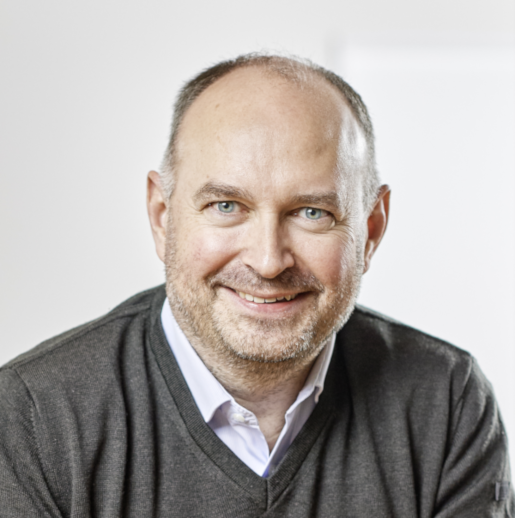 Not sure how these cultural differences relate to your own interview situation? In a free chemistry call, we can discuss your professional background, your experience and the expectations you may encounter in German-speaking job interviews.
Together, we'll explore how you can communicate your strengths clearly and confidently.
It's a first opportunity to see whether my coaching is the right next step for you.