
German Job Interviews for Ukrainian Graduates: 5 Cultural Differences and How to Adapt
Written by Gernot Sauerborn, Systemic Management Coach for International Experts in German Speaking Countries
Last Update: November 7, 2026
Ukrainian graduates often bring strong theoretical training and a high ability to adapt. In Germany, Austria and Switzerland, hiring managers look for one more thing: Can this person organize their own learning and bring ideas into the team from the start?
The goal is not to leave your background behind, but to present it in a form interviewers recognize: academic depth and practical initiative together.
Most Important Cultural Differences
| Ukraine | German Speaking Countries | |
|---|---|---|
| Core Asset | Fundamental knowledge & theoretical understanding | Practical curiosity & structured learning ability |
| Initiative | Reactive, waiting for clear tasks | Proactive, seeking tasks and offering ideas |
| Communication | Reserved, waiting to be addressed | Participative, openly sharing ideas and questions |
| Problem-Solving | Avoiding mistakes, seeking perfect conditions | Solution-oriented, experimenting and learning from errors |
| Positioning | Diligent learner with strong grades | Motivated junior colleague with a problem-solving mindset |
How to Adapt to Cultural Differences For German Job Interviews
Your academic knowledge opens the door. What sets you apart is how you keep learning beyond it, so bring one concrete example.
- Ukraine: The primary asset is the depth of theoretical knowledge acquired during studies. A graduate's value is proven by strong grades, a solid diploma, and the ability to absorb formal instruction. The focus is on what they have been taught.
- Germany, Austria, and Switzerland: Interviewers take a good degree for granted and ask what you did beyond the curriculum. A self-chosen course, a side project, or a tool you taught yourself shows that you can structure your own learning, which is what employers expect from a junior colleague.
Diligence is a real strength. Add that you also look for the next task before someone assigns it.
- Ukraine: Initiative is often expressed by diligently completing assigned tasks. The unspoken rule is to wait for instructions from a superior to ensure one is doing the 'right' thing and not overstepping. Independence is shown within a clearly defined framework.
- Germany, Austria, and Switzerland: Finishing a task and then waiting can be read as passivity, even when it is meant as respect. A simple 'What should I take on next?' or 'Could I help with this?' tells the team that you think along.
Respectful listening is valuable. Complement it with one question or idea per conversation, so the interviewer can see how you think.
- Ukraine: Communication in an interview and early career stage is typically more reserved and formal. Graduates may wait to be addressed directly before speaking, showing respect by not interrupting or questioning the authority of the interviewer or future manager.
- Germany, Austria, and Switzerland: Silence leaves the other side with little to judge. A well-placed question or a first idea is treated as a sign of interest and confidence, not as a challenge to the interviewer's authority.
Your care for correctness is an asset. Show that you also try a solution before asking for help, even if you are not sure it is perfect.
- Ukraine: The focus is often on avoiding errors by sticking closely to known methods and seeking perfect conditions before acting. Problem-solving can be theoretical, with an emphasis on finding the one 'correct' answer to avoid criticism.
- Germany, Austria, and Switzerland: 'I wanted to avoid a mistake, so I waited' sounds careful to you and hesitant to many hiring managers. A short account such as 'I tried this, it did not work, so I changed that' shows the working style they look for in a junior colleague.
You can be a diligent learner and a contributor at the same time. Say both in one sentence.
- Ukraine: A graduate positions themselves as a diligent learner and a 'blank slate' ready to be filled with the company's knowledge. The unspoken promise is to be a reliable, low-maintenance employee who will follow instructions and work hard.
- Germany, Austria, and Switzerland: Describing yourself only as a hard-working learner invites the question what you will contribute. Employers are more convinced by a junior colleague who learns quickly and also brings an idea, such as 'In my last project I suggested...'.
Some Answers adapted to D-A-CH Interview Culture
- From "I have a strong theoretical foundation and am ready to learn what is required." to "I combine my strong academic foundation with a proactive approach to learning. For example, I independently took an online course to deepen my practical skills in [specific tool/topic]."
- From "I prefer to receive clear instructions so I can complete my tasks without mistakes." to "I ensure high-quality results by proactively clarifying expectations and structuring my own work. I document my steps to ensure reliability and consistency."
- From "I wait for my supervisor to tell me what needs to be done next." to "Once I finish a task, I proactively check in with my team or supervisor to ask what support is needed next or offer my help on upcoming projects."
- From "I am careful not to make mistakes, so I only speak up when I am absolutely sure." to "I actively participate in discussions by asking questions and sharing my thoughts, as I believe this contributes to team learning and better problem-solving."
- From "My goal is to master the tasks I am given perfectly." to "My goal is to understand the bigger picture and find practical solutions. When I encounter an obstacle, I first try to find a potential solution myself before asking for guidance."
Special Advice from my Perspective as Management Coach
Try this: the 60-second learning story (15 min).
- Choose one thing you taught yourself, such as a tool, a skill, or a project beyond your curriculum.
- Write it in three sentences: what you wanted to achieve, what you did on your own, what came out of it.
- Add one sentence about your next step: 'Next, I would...'
- Say it aloud twice and record it. Does it show initiative, not only knowledge?
Your academic foundation stays the starting point. The story shows what you do with it.
Your Next Step
If you want to explore this further, my German interview coaching offers a structured space to practice real interview situations, refine personal positioning, reduce nervousness, and build confident presence — even in unfamiliar cultural environments.
At the same time, you can practice your German communication skills in a secure environment.
Explore other guides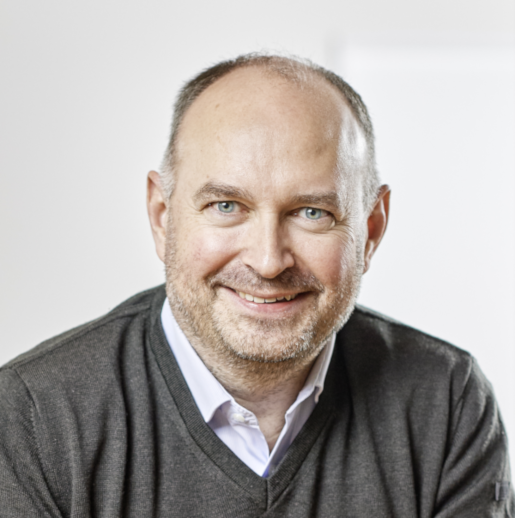 Not sure how these cultural differences relate to your own interview situation? In a free chemistry call, we can discuss your professional background, your experience and the expectations you may encounter in German-speaking job interviews.
Together, we'll explore how you can communicate your strengths clearly and confidently.
It's a first opportunity to see whether my coaching is the right next step for you.