
German Job Interviews for Turkish Graduates: 5 Cultural Differences and How to Adapt
Written by Gernot Sauerborn, Systemic Management Coach for International Experts in German Speaking Countries
Last Update: November 7, 2026
Turkish graduates often stand out through warmth, team spirit, and the ability to build relationships quickly. Hiring managers in Germany, Austria and Switzerland appreciate this and look for more: Can this person structure their own work and communicate directly?
The most convincing candidates combine both: personal warmth and professional reliability.
Most Important Cultural Differences
| Turkey | German Speaking Countries | |
|---|---|---|
| Core Asset | Personal connections & theoretical foundation | Structured initiative & practical reliability |
| Initiative | Relationship-driven, helping within networks | Process-driven, proactively structuring own work |
| Communication | Harmonious, indirect, context-rich | Direct, structured, content-focused |
| Problem-Solving | Flexible, improvisational within relationships | Methodical, following established procedures |
| Positioning | Loyal, relationship-oriented team player | Reliable, structured junior colleague |
How to Adapt to Cultural Differences For German Job Interviews
Your warmth and your studies both count. Add one example that shows how you organize your own work, so the interviewer can see the reliability behind the friendliness.
- Turkey: The primary assets are personal relationships and a solid theoretical foundation. Graduates rely on their ability to connect with people and the trust built through personal networks. Demonstrating that one is a 'good person' and has learned the material well is highly valued.
- Germany, Austria, and Switzerland: A friendly impression helps in the first minutes, but it does not answer the question the hiring manager is really asking: can I rely on this person's work? An example of how you plan, track, and finish a task gives that answer.
Helping others is a real strength. Add that you also structure your own tasks first and check what comes next.
- Turkey: Initiative is often expressed through interpersonal helpfulness. A graduate shows engagement by offering help to colleagues, being present, and demonstrating willingness within the context of relationships. The focus is on social integration as a pathway to professional contribution.
- Germany, Austria, and Switzerland: Offering help to everyone can look busy but unfocused if your own tasks are not visible. Interviewers prefer to hear that you first organized your work and then offered support, for example: 'I finished my part early and asked the lead what to take on next.'
Tact and consideration are strengths. Add one clear sentence per answer, so the content is easy to find.
- Turkey: Communication tends to be context-rich, harmonious, and indirect. Preserving relationships and avoiding open confrontation is prioritized. Messages are often embedded in social context, and reading between the lines is expected. Direct disagreement may feel personally disrespectful.
- Germany, Austria, and Switzerland: Indirect answers can leave the interviewer unsure what you actually think, and some will read this as evasive. A short, friendly first sentence with the point ('My answer is yes, and here is why') keeps the warmth and gives them something to evaluate.
Resourcefulness is valuable. Show that you check existing procedures first and then use your network for what is left.
- Turkey: Problem-solving is often flexible and improvisational, drawing on personal networks and creative workarounds. When formal processes are unclear or inflexible, the ability to find a path through relationships and informal channels is highly valued. Adaptability trumps procedure.
- Germany, Austria, and Switzerland: 'I know someone who can help' answers the problem but not the question of reliability. Hiring managers want to hear that you looked at the documented process first, and what you did when it did not cover your case.
Being a loyal team player is a plus. Add the part employers can measure: what they can count on from you.
- Turkey: A graduate positions themselves as a loyal, relationship-oriented team player. The unspoken promise is: 'I will fit in, build good relationships, and support my colleagues personally.' Trust grows through personal connection and demonstrated loyalty to the group.
- Germany, Austria, and Switzerland: 'I will fit in well' tells the interviewer about the atmosphere, not about the work. Employers decide on promises they can check, such as: 'You can count on me to meet deadlines and to flag problems early.'
Some Answers adapted to D-A-CH Interview Culture
- From "I learn quickly and build good relationships with everyone I work with." to "I combine my ability to learn quickly with a structured approach. For example, I create my own checklists and documentation to ensure I complete tasks reliably and can share what I've learned with the team."
- From "I am flexible and help wherever help is needed, especially when I have good relationships." to "I take initiative by proactively structuring my own tasks. When I finish early, I ask my team leader what priorities come next rather than waiting for someone to notice I am free."
- From "I communicate respectfully and avoid confrontation to maintain good team atmosphere." to "I communicate directly and respectfully. If I see a potential issue, I address it constructively with the team member involved rather than hoping it resolves itself."
- From "When problems arise, I find creative solutions through my network and personal contacts." to "When problems arise, I first check existing processes and documentation. If I cannot resolve it myself, I prepare a clear description of the issue before asking my supervisor for guidance."
- From "My goal is to be a trusted, loyal team member who fits in well." to "My goal is to be a reliable colleague whom the team can count on. I build trust through consistent delivery, clear communication, and taking ownership of my responsibilities."
Special Advice from my Perspective as Management Coach
Try this: from warmth to working habits (15 min).
- Write down three things colleagues or fellow students appreciate about you, such as helpfulness or team spirit.
- For each one, find the concrete working habit behind it: 'I keep a shared checklist so nobody has to ask twice.'
- Think of a situation where you would normally only hint at a problem. Write the direct version in two sentences: what you noticed, what you suggest.
- Say it aloud in a friendly voice. The warmth stays, the content comes first.
Your Next Step
If you want to explore this further, my German interview coaching offers a structured space to practice real interview situations, refine personal positioning, reduce nervousness, and build confident presence — even in unfamiliar cultural environments.
At the same time, you can practice your German communication skills in a secure environment.
Explore other guides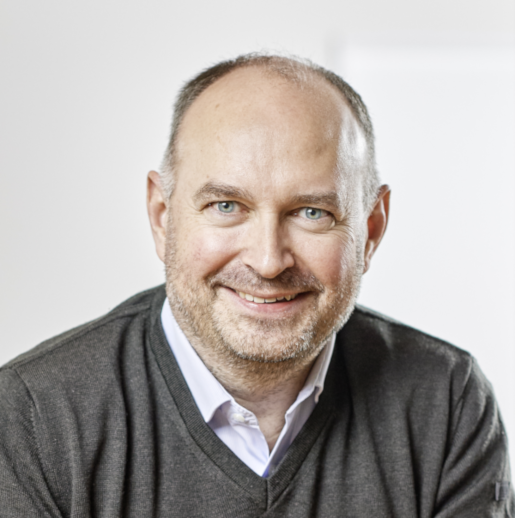 Not sure how these cultural differences relate to your own interview situation? In a free chemistry call, we can discuss your professional background, your experience and the expectations you may encounter in German-speaking job interviews.
Together, we'll explore how you can communicate your strengths clearly and confidently.
It's a first opportunity to see whether my coaching is the right next step for you.