
German Job Interviews for Russian Experts: 5 Cultural Differences and How to Adapt
Written by Gernot Sauerborn, Systemic Management Coach for International Experts in German Speaking Countries
Last Update: November 7, 2026
Russian experts often bring deep technical knowledge, strong analytical skills and the ability to solve difficult problems with limited resources. Employers in Germany, Austria and Switzerland value this and ask in addition: Can you present your achievements clearly, work well within a team, and make your solutions usable for others?
The strongest interview stories connect both sides: individual expertise and a visible contribution to the team and its processes.
Most Important Cultural Differences
| Russia | German Speaking Countries | |
|---|---|---|
| Expertise Presentation | Depth of knowledge and the difficulty of the problem solved | Applied results, decisions & benefit for the team |
| Self-Promotion | Understatement, 'the work speaks for itself' | Clear, factual statement of own achievements |
| Teamwork | Independent work, trust within a small circle | Cooperation, knowledge sharing & early alignment |
| Working Style | Improvisation and last-minute problem solving | Planning, documentation & predictable delivery |
| Positioning | The strong specialist who can solve what others cannot | The reliable partner who strengthens the system |
How to Adapt to Cultural Differences For German Job Interviews
The difficulty of problems you solved is impressive. Add what others can now do better because of your work.
- Russia: Expertise is presented through depth, mathematical or technical rigor and the difficulty of the problem solved. Being able to handle what others cannot is the main proof of quality.
- Germany, Austria, and Switzerland: Interviewers assume technical competence and test something else: Can others apply your knowledge, and does it fit existing processes? Describe not only what you solved, but what changed for the team and the customer.
Your modesty is a sign of seriousness. Add clear statements, so the interviewer does not have to guess your contribution.
- Russia: Self-praise is often seen as inappropriate or a sign of weak substance. Experts expect that quality becomes visible through results and recommendations within their circle.
- Germany, Austria, and Switzerland: Interviewers do not know your previous environment and cannot verify your reputation. They expect you to state your contribution factually, with numbers and examples. Doing so is read as transparency, not as boasting.
Independence is a strength. Show that you also share knowledge and align early.
- Russia: Trust is built within small circles, and experts often work independently on their part of the problem. Knowledge can be a personal asset, and cooperation with unfamiliar colleagues develops slowly.
- Germany, Austria, and Switzerland: Employers read knowledge that sits in one head as a continuity risk. Teamwork, handovers and open exchange are part of the role. A short example of a shared repository, a training session or a joint solution shows that you reduce that risk.
Your ability to solve problems under pressure is valuable. Show that you also prevent the pressure through planning.
- Russia: Unclear conditions and changing requirements made improvisation and intense last-minute effort a normal part of work. Solving the problem at the last moment is admired.
- Germany, Austria, and Switzerland: Predictable delivery, documentation and realistic planning are signs of professionalism. Frequent rescue stories can raise the question of why the problem arose. Pair each story with what you changed to avoid it next time.
Being the person for the hardest problems is a strong position. Add how you make the team stronger for the next ones.
- Russia: Experts position themselves as strong specialists who can take on what others cannot. Status comes from technical authority and from being trusted with the most difficult tasks.
- Germany, Austria, and Switzerland: 'I fix what others cannot' can suggest dependence on one person. Employers respond better to 'I solve difficult problems and help the team solve the next one without me', because it signals resilience and cooperation.
Some Answers adapted to D-A-CH Interview Culture
- From "I solved a very complex problem that nobody else could handle." to "I solved [specific problem] by [approach] and documented the solution so that the team could reuse it. As a result, [measurable outcome]."
- From "I do not like to talk about my achievements. My results show what I can do." to "I would like to be clear about my contribution: I was responsible for [area], and I achieved [result]. I am happy to go into more detail on any point."
- From "I prefer to work independently and report when the result is ready." to "I work independently and I keep my colleagues informed at key points, especially where their work depends on mine. This prevents problems before they appear."
- From "When a deadline was near, I worked day and night and solved it." to "I plan work in stages and communicate risks early. In the rare cases when a peak occurs, I agree on the extra effort openly and afterwards improve the plan."
- From "I am the person who can fix what others cannot." to "I solve difficult problems, and I make sure the team can handle similar ones in future. For example, I introduced [documentation/training/checklist] for [topic]."
Special Advice from my Perspective as Management Coach
Try this: the contribution card (25 min).
- Choose a project or a problem you solved.
- Write on one page: the problem, your approach, your personal decisions, the result with a number, and what the team can now do better.
- Condense it to three sentences in the first person, without technical detail the interviewer does not need.
- Say it aloud twice. Does it sound factual and clear, neither shy nor exaggerated?
Your problem-solving strength stays visible, and your contribution becomes easy to assess.
Your Next Step
If you want to explore this further, my German interview coaching offers a structured space to practice real interview situations, refine personal positioning, reduce nervousness, and build confident presence — even in unfamiliar cultural environments.
At the same time, you can practice your German communication skills in a secure environment.
Explore other guides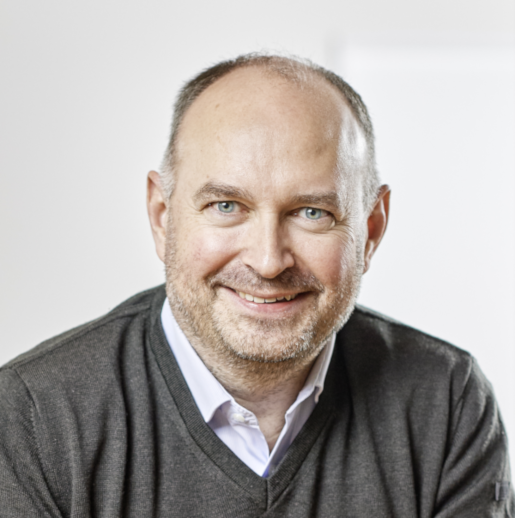 Not sure how these cultural differences relate to your own interview situation? In a free chemistry call, we can discuss your professional background, your experience and the expectations you may encounter in German-speaking job interviews.
Together, we'll explore how you can communicate your strengths clearly and confidently.
It's a first opportunity to see whether my coaching is the right next step for you.