
German Job Interviews for Romanian Senior Leaders: 5 Cultural Differences and How to Adapt
Written by Gernot Sauerborn, Systemic Management Coach for International Experts in German Speaking Countries
Last Update: November 7, 2026
Romanian executives often have rare experience of leading through rapid change and of working across Central and Eastern European markets. In D-A-CH interviews, this experience convinces most when it comes with a second answer: How do long-term planning, compliance, and shared governance shape the way you lead?
Speed and market knowledge on one side, institutional stability on the other: show that you can offer both.
Most Important Cultural Differences
| Romania | German Speaking Countries | |
|---|---|---|
| Strategy Approach | Opportunity-driven & fast-adapting | Long-term planning with scenarios |
| Decision-Making & Governance | Concentrated with the leader or owner | Shared with boards & employee representatives |
| Rules & Compliance | Formal rules, pragmatic practice | Compliance as a non-negotiable standard |
| People & Talent | Retention through personal relationships | Transparent, consistent HR frameworks |
| Positioning | Transformation leader in fast-changing markets | Leader who anchors results in structure and bridges markets |
How to Adapt to Cultural Differences For German Job Interviews
Adapting quickly is a strength you have proven. Add a long-term frame that shows where the adaptations are leading.
- Romania: Strategy is often opportunity-driven and adaptive. Leaders who have worked through rapid economic change, regulatory shifts, and market growth are used to adjusting course quickly and to planning with shorter horizons.
- Germany, Austria, and Switzerland: Boards in D-A-CH companies often think in multi-year cycles and ask how today's decision fits the next ten years. Frequent changes of direction can read as the lack of a plan, so link each adjustment to a stated long-term aim and the scenarios you considered.
Clear personal accountability is valuable. Show how you bring boards and representatives into your decisions.
- Romania: In many founder-led or owner-managed companies, decisions are concentrated with the leader or the owners. Executives are expected to decide, to take responsibility personally, and to represent the company to the outside.
- Germany, Austria, and Switzerland: Supervisory boards, works councils, and employee representatives have real rights, and decisions may be delayed or reversed if they are bypassed. Interviewers want to hear how you prepared a major decision with these groups, what you changed after hearing them, and how you handled disagreement.
Experience in complex regulatory environments is a strength. Make explicit how you protect integrity, and be ready to talk about gray areas.
- Romania: Executives often work in an environment where regulations change frequently and where formal rules and everyday practice can differ. Navigating this skillfully, and finding solutions that are both legal and practical, is part of the job.
- Germany, Austria, and Switzerland: Compliance is a fixed part of executive responsibility, and managing directors can be held personally liable. Expect direct questions about integrity and about a situation in which a rule was unclear. A candid account of the safeguards you introduced, such as audit trails, a second signature, or a reporting channel, builds trust.
Winning and keeping talent through personal relationships is a skill. Add the clear criteria and processes that make it fair and visible.
- Romania: Many companies have competed for qualified staff in a market where talented people can move abroad or to better offers. Leaders retain them through personal attention, flexibility, and individual arrangements.
- Germany, Austria, and Switzerland: Individual deals can raise questions about fairness, especially where works councils and equal-treatment rules apply. Interviewers listen for transparent pay bands, comparable promotion criteria, and talent processes that work without your personal intervention.
Your experience of transformation and of the Central and Eastern European market is rare. Present it together with the structures you built to secure it.
- Romania: Executives often position themselves as transformation leaders who built or turned around a business in a fast-changing market. Personal drive, speed, and results are the core of the story.
- Germany, Austria, and Switzerland: A transformation story told only through personal drive leaves open what remains once you leave. Boards respond to the combination: the speed and market knowledge that you bring, plus the team, governance, and processes that make the result last. Your knowledge of CEE markets can also be positioned as a bridge for the company's business in the region.
Some Answers adapted to D-A-CH Interview Culture
- From "I adapt strategy quickly to changes in the market and seize opportunities." to "I adapt quickly to the market, and I anchor the direction in a long-term plan with scenarios, so the organization stays stable while it moves."
- From "As the leader, I take the decision and take full responsibility for it." to "I take responsibility for decisions, and I prepare them with the board and affected stakeholders, so they are supported and can be implemented."
- From "I know how to navigate complex rules and make things work in practice." to "I know complex regulatory environments, and I treat compliance as a fixed standard. I can explain how I handled gray zones and which safeguards I put in place."
- From "I keep strong people through personal relationships and individual solutions." to "I keep strong people through personal relationships, and I back them with transparent criteria for pay, promotion, and development."
- From "I transformed the company and led it through rapid growth." to "I led the company through rapid change, and I built the structures and the management team that carry it forward. I also know how to connect Central and Eastern European markets with partners in D-A-CH."
Special Advice from my Perspective as Management Coach
Try this: the gray-zone story (30 min).
- Choose a situation in which the rules were unclear or in which competing pressures pulled you in different directions.
- Write it in five sentences: the situation, your options, what you decided and why, the safeguards you introduced afterwards, the result.
- Check: does the story show integrity and learning, and not only skill in finding a way?
- Prepare your answer to the follow-up question 'What would you do differently today?'
- Add one sentence about the structure or rule that remains in place after you.
Your skill in complex environments and your standards for integrity belong in the same story.
Your Next Step
If you want to explore this further, my German interview coaching offers a structured space to practice real interview situations, refine personal positioning, reduce nervousness, and build confident presence — even in unfamiliar cultural environments.
At the same time, you can practice your German communication skills in a secure environment.
Explore other guides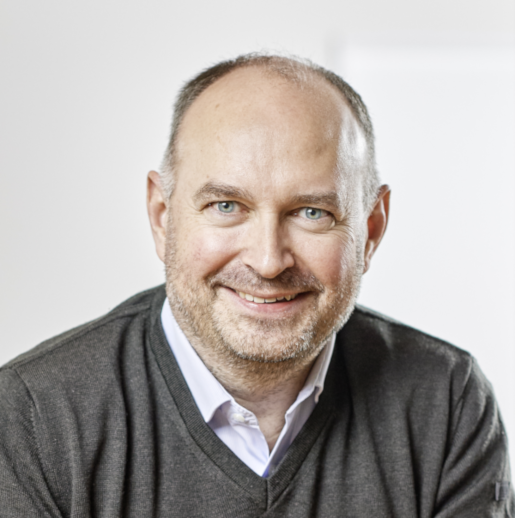 Not sure how these cultural differences relate to your own interview situation? In a free chemistry call, we can discuss your professional background, your experience and the expectations you may encounter in German-speaking job interviews.
Together, we'll explore how you can communicate your strengths clearly and confidently.
It's a first opportunity to see whether my coaching is the right next step for you.