
German Job Interviews for Romanian Experts: 5 Cultural Differences and How to Adapt
Written by Gernot Sauerborn, Systemic Management Coach for International Experts in German Speaking Countries
Last Update: November 7, 2026
Romanian experts often bring broad technical versatility and the ability to deliver in demanding, fast-moving projects. Employers in Germany, Austria and Switzerland add a question: Where exactly is your depth, and how do you make quality and knowledge repeatable for the team?
The strongest candidates present both: the flexibility to make things work and the discipline to document and secure the result.
Most Important Cultural Differences
| Romania | German Speaking Countries | |
|---|---|---|
| Expertise Presentation | Broad technical versatility | Clear specialization with proven depth |
| Working with Requirements | Start quickly, adapt along the way | Clarify scope first, document changes |
| Knowledge Sharing | Generous, informal & verbal | Documented & accessible to everyone |
| Quality Approach | Pragmatic delivery under tight deadlines | Quality built in through standards, tests & reviews |
| Positioning | The expert who makes it work, whatever it takes | The expert who makes work predictable and repeatable |
How to Adapt to Cultural Differences For German Job Interviews
Your versatility is a real asset. Add the area in which you go deepest, with proof.
- Romania: Experts are often versatile, comfortable working across several tools, technologies, or functions, and able to learn what a project demands. Breadth is seen as a sign of competence and employability.
- Germany, Austria, and Switzerland: A long list of technologies can blur your profile for a reader who needs to fill a specific role. Interviewers listen for where you are strongest, what you can show for it (a certificate, a project, a publication), and which neighboring skills support it.
Starting quickly shows commitment. Add a short clarification step, so your speed goes in the right direction.
- Romania: Work often starts before every detail is defined, and requirements are clarified and adjusted along the way. Flexibility toward changing demands, including those from customers, is seen as a professional strength.
- Germany, Austria, and Switzerland: Open requirements that are settled by working are efficient only if everyone shares the same picture. Employers expect scope, assumptions, and changes to be written down, so that disagreements about 'what was agreed' do not appear late. A sentence such as 'I confirmed the scope in writing before I began' lands well.
Helping colleagues freely is a strength. Add one place where the answers are stored for everyone.
- Romania: Knowledge is often shared generously but informally: through direct questions, quick calls, or chat messages. Experts are known as people who help when asked.
- Germany, Austria, and Switzerland: Knowledge that lives in conversations is hard to find and disappears when people change roles. Hiring managers like examples such as a wiki page, a runbook, or a short recording that colleagues can use without asking you.
Delivering under pressure is valuable. Show how you secure quality, so the result remains reliable.
- Romania: Quality is understood pragmatically: a working solution on time matters most, and details can be refined later. Many experts are used to fast-moving projects, demanding clients, and tight deadlines.
- Germany, Austria, and Switzerland: A working solution is the minimum. Interviewers look for how quality was ensured: tests, reviews, standards, and a clear definition of done. Naming the check that would have caught a weakness early shows professional discipline.
Being the person who makes things work is a strong position. Add that you make the next time easier too.
- Romania: Experts often position themselves as the person who solves a hard problem whatever it takes, including extra hours or creative shortcuts. Dedication and reliability under pressure are strong points of reputation.
- Germany, Austria, and Switzerland: A solution that required extraordinary effort raises the question whether it can be repeated. Employers respond to 'I turned a one-time fix into a routine', because it shows that your work reduces future risk and workload.
Some Answers adapted to D-A-CH Interview Culture
- From "I can work with many technologies and learn whatever a project needs." to "I work with a broad range of technologies, and my deepest expertise is in [specialty], backed by [certificate/project]."
- From "I start right away and adjust as the requirements become clear." to "I start quickly, and first I confirm scope and priorities in writing. When requirements change, I document the change and its impact."
- From "I am always happy to help colleagues who ask me." to "I help colleagues directly, and I write down recurring solutions in a shared place, so the whole team can use them."
- From "I deliver working solutions even when time is short." to "I deliver working solutions under time pressure, and I secure them with tests and reviews, so they stay reliable afterwards."
- From "I make things work, whatever it takes." to "I make things work, and I make sure the solution is repeatable, so the team does not depend on a special effort next time."
Special Advice from my Perspective as Management Coach
Try this: the specialist profile (20 min).
- List all technologies, methods, and tasks you work with.
- Mark the three where you can show evidence: a project, a result, a certificate, or a publication.
- Write a profile statement: 'My focus is X. I can show this through Y and Z. In addition I work with A and B.'
- Check your CV: does the first third show your focus area before the full list?
- Say the statement aloud in 30 seconds.
Your versatility stays visible, and the reader knows where to place you.
Your Next Step
If you want to explore this further, my German interview coaching offers a structured space to practice real interview situations, refine personal positioning, reduce nervousness, and build confident presence — even in unfamiliar cultural environments.
At the same time, you can practice your German communication skills in a secure environment.
Explore other guides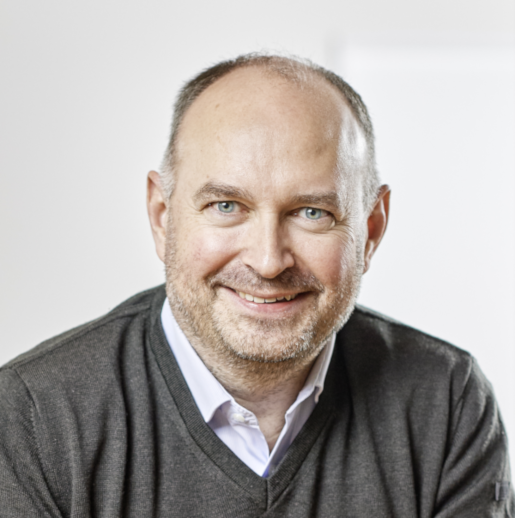 Not sure how these cultural differences relate to your own interview situation? In a free chemistry call, we can discuss your professional background, your experience and the expectations you may encounter in German-speaking job interviews.
Together, we'll explore how you can communicate your strengths clearly and confidently.
It's a first opportunity to see whether my coaching is the right next step for you.