
German Job Interviews for Indian Experts: 5 Cultural Differences and How to Adapt
Written by Gernot Sauerborn, Systemic Management Coach for International Experts in German Speaking Countries
Last Update: November 7, 2026
Indian experts often bring strong technical skills, experience with large-scale delivery and exceptional adaptability. Employers in Germany, Austria and Switzerland value this and ask in addition: What exactly was your contribution, and will you take ownership and speak up when something does not work?
The strongest interview stories connect both sides: technical excellence and a clear personal profile with a coherent direction.
Most Important Cultural Differences
| India | German Speaking Countries | |
|---|---|---|
| Expertise Presentation | Team achievements, scale & technologies used | Individual contribution, decisions & results |
| Ownership | Service orientation, saying yes to requests | Accountability for results, pushing back with reasons |
| Career Path | Job changes for growth and salary | Coherent path, stability & long-term commitment |
| Salary Expectations | Large increases at job changes are common | Market-based, structured, justified by role and experience |
| Positioning | The flexible all-rounder who can handle anything | The profile with clear focus and recognizable strengths |
How to Adapt to Cultural Differences For German Job Interviews
Large-scale experience is a strong asset. Add what you personally decided, built or improved within it.
- India: Expertise is often presented through the scale and prestige of projects, clients and technologies. Success is described as a team achievement, and the individual's part is understood implicitly.
- Germany, Austria, and Switzerland: Interviewers cannot judge your level from the project size alone. They ask about your role, your decisions and your results, and expect numbers or concrete outcomes. A precise 'I' statement makes your expertise tangible.
Your reliability toward clients and managers is valued. Show that you also take responsibility for the result, including when it means saying no.
- India: Service orientation is strong. Requests from clients and superiors are met, difficulties are solved quietly, and a refusal may be seen as unhelpful or as a lack of commitment.
- Germany, Austria, and Switzerland: Experts are expected to think along and to take responsibility for the outcome. Pointing out risks early and pushing back with reasons is seen as professional, not as resistance. Prepare an example in which you said 'no' or 'not like this' and the project benefited.
Your career moves show ambition and learning speed. Present them as a path with a thread.
- India: Changing employers every two to three years is common and often the fastest way to advance in role and salary. A varied record signals adaptability and market value.
- Germany, Austria, and Switzerland: Frequent changes can raise questions about loyalty, especially in Switzerland and in traditional companies. A short explanation for each step, and a clear reason for choosing this employer and this country, turns the record into a coherent story.
Knowing your value is important. Anchor it in the local market.
- India: Salary jumps of 30 to 50 percent at a job change are often seen as normal, and expectations are shaped by this pattern. Negotiation can be tough, and the figure is often named early.
- Germany, Austria, and Switzerland: Salary bands are more structured and depend on role, industry, region and collective agreements. Demands based on the previous Indian salary can appear unrealistic. Research market data, name a range and explain it with your experience and the role.
Adaptability is a real strength. Show it through a recognizable focus.
- India: Experts position themselves as versatile and able to take on any technology, role or client. The value proposition is: 'Give me a challenge and I will deliver.'
- Germany, Austria, and Switzerland: 'I can do anything' makes it hard for employers to see where you fit. A clear profile such as 'I am strongest in A and B, and I am building C' helps them match you to a role and a team.
Some Answers adapted to D-A-CH Interview Culture
- From "We delivered a large-scale project for a global client with a team of 40 people." to "In a project with 40 people, I was responsible for [specific module]. I made the decision to [specific decision], which reduced [problem] by [measurable result]."
- From "I always do whatever the client or my manager asks, and I find a way to deliver." to "I take responsibility for the outcome, not only for the task. When a request puts quality or deadlines at risk, I raise it early, explain the impact and suggest an alternative."
- From "I changed companies frequently to grow faster and learn more." to "Each move had a clear reason: at [company A], I built [skill]; at [company B], I took on [responsibility]. Now I am looking for a place where I can apply this depth over the long term."
- From "I am looking for a salary that reflects a significant increase over my current package." to "Based on my experience and the market for this role in [region], I expect a gross annual salary in the range of [X to Y]. I am open to discussing the full package."
- From "I am flexible and can work on any technology or project that is needed." to "My strengths are [area A] and [area B], where I have [X] years of experience. I learn new topics quickly, and I want to deepen my expertise in [specific direction]."
Special Advice from my Perspective as Management Coach
Try this: the ownership story (25 min).
- Choose one project from your career and write down what the team achieved.
- Underline everything that you personally decided, designed or fixed, and rewrite the story using only these points, in the first person.
- Add one sentence about a risk you raised or a request you challenged, and what happened.
- Condense it to a two-minute version with one number or concrete result.
Your delivery strength stays visible, and your personal contribution becomes clear.
Your Next Step
If you want to explore this further, my German interview coaching offers a structured space to practice real interview situations, refine personal positioning, reduce nervousness, and build confident presence — even in unfamiliar cultural environments.
At the same time, you can practice your German communication skills in a secure environment.
Explore other guides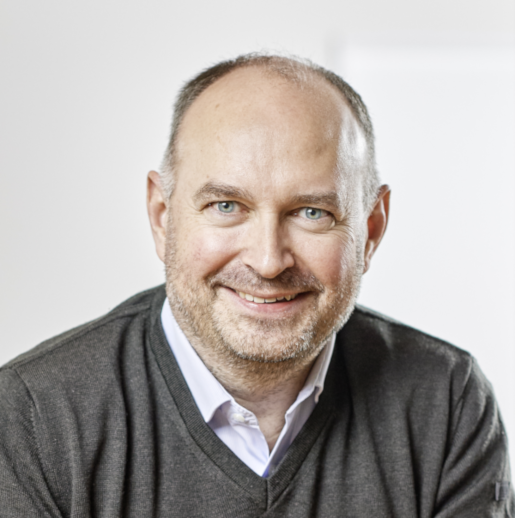 Not sure how these cultural differences relate to your own interview situation? In a free chemistry call, we can discuss your professional background, your experience and the expectations you may encounter in German-speaking job interviews.
Together, we'll explore how you can communicate your strengths clearly and confidently.
It's a first opportunity to see whether my coaching is the right next step for you.